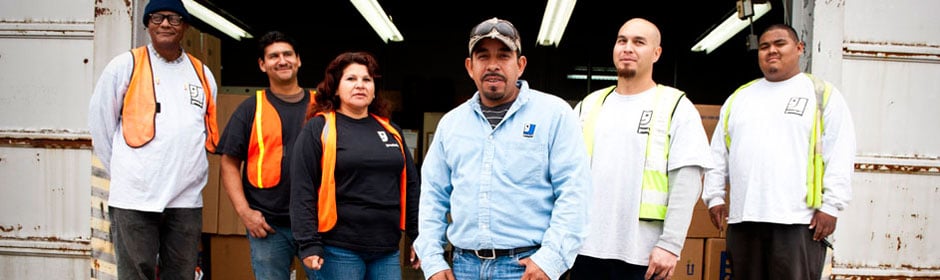
 Last week, approximately 160 people representing Goodwill agencies all across the country came to Washington to inform members of Congress about how Goodwill helps people who have employment challenges to find jobs and advance in careers. A number of others participated virtually through Goodwill’s Legislative Action Center.
Those who engaged with their Congressional representatives explained that Goodwill served more than 6.7 million people in 2012, placing 213,000 people in jobs; however they noted that these achievements depend on a public-private partnership that exists between Goodwill and government programs that leverage Goodwill’s resources and expertise.
Unfortunately, this public-private partnership is becoming lopsided. Over the course of the past decade, we have aggressively worked to increase our capacity to do more, while government resources have steadily declined.
Let’s compare.
In 2002, local Goodwill agencies collectively reported that they generated a little more than $2 billion in their retail stores and other social enterprises, 18 percent of which came from government grants or fees for service. Goodwill invested more than 81 percent of its revenue to provide services to nearly 575,000 people. In 2012, Goodwill generated nearly $4.9 billion, 12 percent of which came from a government source. Goodwill invested nearly 82 percent of its revenue to provide services to more than 6.7 million individuals.
By comparison, key government investments that leverage Goodwill are steadily eroding. Consider the primary federal investment in job training. In 2002, the combined federal investment in job training for youth, adults and dislocated workers totaled nearly $3.5 billion. Today, that investment has declined by nearly 30 percent. And this week, House appropriators agreed to a plan that could reduce further reduce spending by more than 18 percent.
These numbers demonstrate a disturbing trend. For at least a decade, public investments in key job training programs have declined, while community-based organizations, like Goodwill are expected to pick up the slack. That is why it is so important for policymakers to appreciate Goodwill’s value as a public-private partner, leading them to protect or establish programs that leverage our resources.
If you would like to volunteer your voice to support Goodwill, click here.